Japan


VISIT Kyoto, Tokyo and Kyushu

DO learn some basic Japanese

EXPLORE the many Temples and Shrines

EAT Okonomiyaki
JULIO
This is now my sixth visit to Japan and in my younger more arrogant years I considered myself a sort of expert on the place but as I grow older and wiser I realize just how deep, fascinating and incredibly complex it is. I spent part of my teens studying my Father during long negotiations with Japanese business men and then he would school me on the many customs, rituals and things to know about the culture. I remember having profound awakenings when going to temples that were 1300 years old that were not only still standing yet somehow more complex, beautiful and fraught with meaning than anything I had seen in my young short life. These experiences expanded my young American consciousness that there was so much more to the world, its cultures and ancient history than I knew and had been taught in school. The USA was only two hundred years old at the time and these buildings/civilizations had been here for more than twelve times that amount. My young mind was blown. I would become a Japanophile as my father was. I also somehow knew that my future would be inexorably linked to the land of the rising sun and I revelled in its history, customs and modern story. My passion for Japan only grows and never subsides. This most recent trip to Kyushu Island would take us deeper into the more authentic and unrevealed countryside.
Having now completed most of the tourist track (Kyoto & Tokyo) and having to stick to more of a budget opened up to completely new places, experiences and led us into a more authentic unseen side of the country. We would explore more suburbs, small towns and areas tourists do not typically go to and it would fulfill our wanderlust more fully and dynamically. The contrasts we felt after having been in India, Indonesia, Malaysia and Korea would completely blow our minds and show us the absolute levels of uniqueness that this part of the world contains so geographically close together.

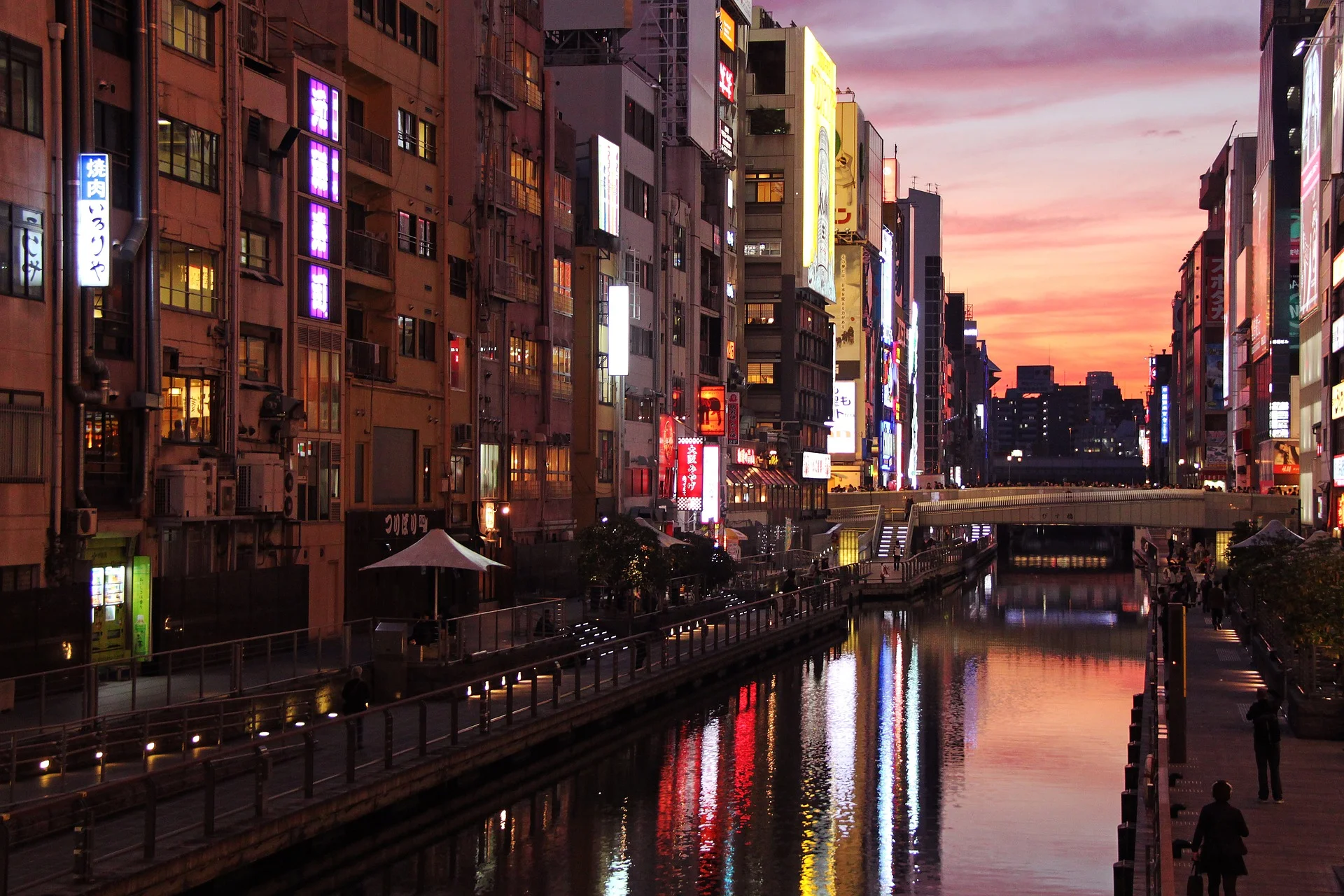

When I first treaveld to Japan in the late nineties it was at the end of the economic boom. It was still all glitz, fancy cars, several thousand dollar dinners and money, money money. Today's Japan, although still the world's second largest economy has been in a slow spiraling recession since 1991. More alarming is the fact that due to many factors which include less opportunity and the new breeds of isolating technology, the Japanese population and birth rates are shrinking at an alarming rate. In fact it is estimated that in less than a decade, the approximately 6.5 million members of the generation born during Japan’s first baby boom (1947-49) will all be 75 years old or older, according to the country’s cabinet office. This is referred to as the "2025" problem and the government is taking radical measures to create new jobs, subsidize child birth and encourage family rearing among its young population. The infamous Japanese work ethic that works its salary men and women to the bone sometimes twenty hours a day has backfired in the way that many young Japanese simply do not want to participate in the work culture of their parents generation or have families that would require the kind of job that might break them.


Japan has been labeled a strongly conformist society but its ethos lies in social hypersensitivity. An entire population that is not restrained in any way as long as an individual's action does not cause trouble for others. Personally, I love this. People are hyper considerate, polite and concerned about not bothering others. At the same time it can be and feel more isolating than most places as the society seems hyper programed for individual independence. Everything can be purchased from a vending machine. You can go through daily life easily here without interacting with other humans in most situations through automation and technology. This phenomenon has also created a fascinating subgroup of people of shut-ins called Hikkikomori.
Japan's society and culture are deeply influenced by its foundation of Bushido (the warrior code), Shinto , Buddhist and of course Zen Bhuddist movements. Shinto is the mystical understanding of the underlying divinity in all things such as animals, rocks , trees, rivers, places and even people which are collectively referred to as Kami. There is a set of rituals and practices connected to worship and acknowledgement of the Kami and 80% of Japanese people practice some form of this worship throughout their lives daily.
Buddhism arrived in Japan in around the 6th century from China and Korea and complimented the native Shinto practices while being embraced by leaders and local governments. Its astika or non orthodox idea that anyone can achieve liberation by practicing the ways of the Buddha were embraced by all classes and groups of Japanese society.
In the 1100's Zen arrived in Japan from China and through its complex theories stressed that all can be achieved with meditation and discipline. It was particularly popular within the military class and continues to be a large part of Japan's societal fabric along with Wabi Sabi.
Wabi Sabi is a way to describe Japan's design aesthetic which can be translated as beauty that is"imperfect, impermanent, and incomplete". This can be seen in everything from the incredible gardens to the way everything is packaged and presented with the utmost care and perfection. The Japanese societal codes like the Bushido, Wabi sabi, Zen and Shinto can be felt deeply throughout the land as well as the effects of the wars and these movements are part of what makes this country a constantly evolving profound enigma and mystery to most that visit its shores. It still remains however my favorite and in my opinion the most unique place on the planet.